TMS is generally safe for most people, and it is non-invasive and medication-free. Even so, any medical treatment deserves an honest look at its side effects and the safety factors a provider screens for before you begin. Here is a clear, straightforward overview.
Is TMS Safe?
Transcranial magnetic stimulation has a strong safety profile. According to the National Institute of Mental Health, rTMS is safe and well tolerated overall, and the magnetic field it produces is about the same strength as an MRI scanner. It is non-invasive, which means there is no surgery and nothing is implanted, and it does not require anesthesia.
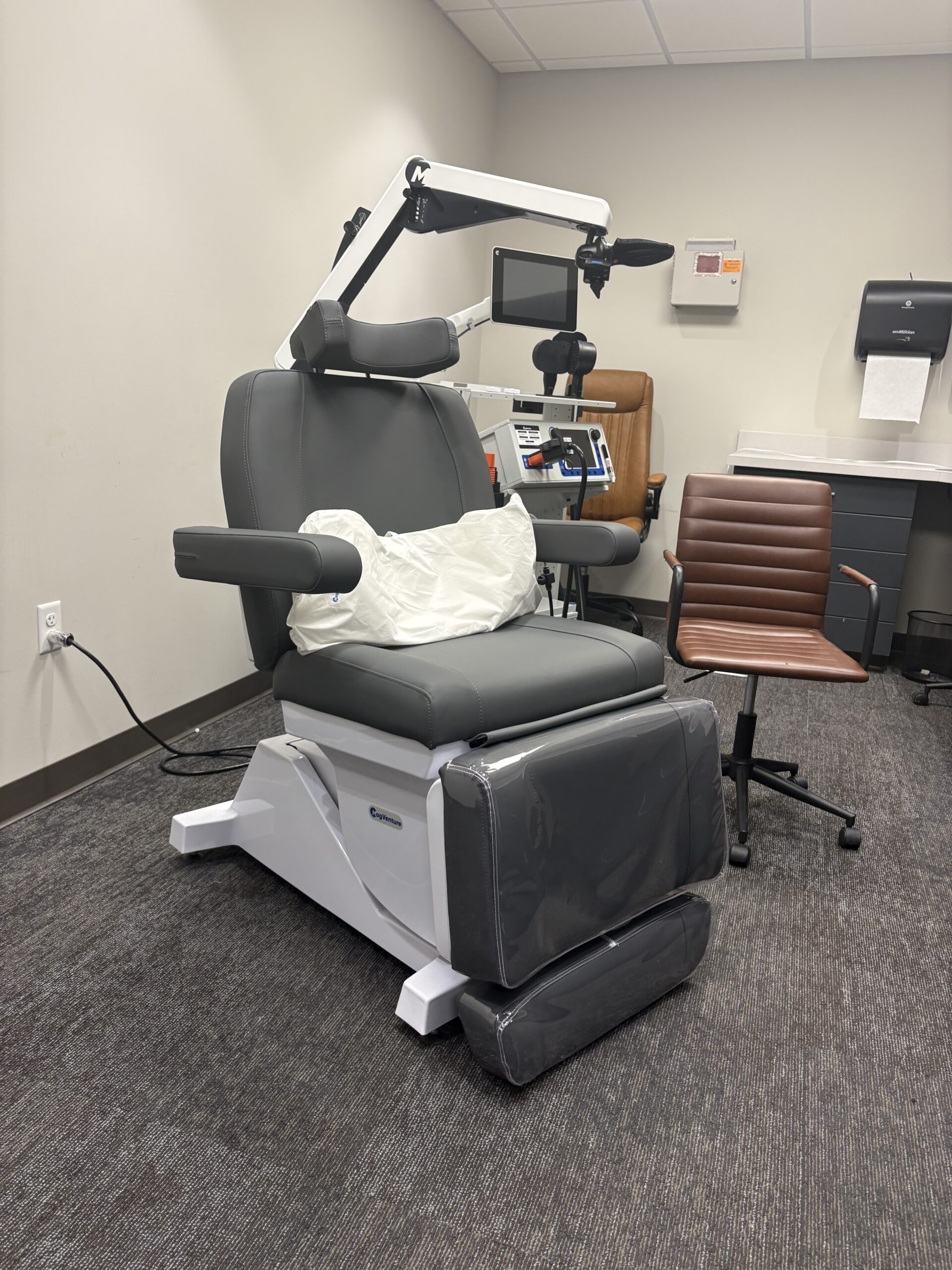
It is also different from electroconvulsive therapy. Mayo Clinic notes that, unlike ECT, rTMS does not cause memory loss and does not require the sedation that ECT involves. You stay awake and alert during each session, and most people read, listen to music, or simply rest while the treatment is delivered. When a session ends, you can return to your day and drive yourself home.
None of this means TMS is right for everyone, and it does not replace a provider's judgment. What the safety record does mean is that, for appropriate candidates who are screened carefully, TMS is a well-established, in-office treatment with a side-effect profile most people tolerate well.
Common, Temporary Side Effects
Most side effects of TMS are mild and tend to ease as treatment continues. Mayo Clinic reports that side effects are generally mild to moderate, improve shortly after a session, and decrease over time with more sessions. The most common include:
- Scalp discomfort or pain at the treatment site
- Headache
- Tingling, spasms, or twitching of facial muscles during the procedure
- Lightheadedness
The National Institute of Mental Health describes a similar set of effects, including discomfort at the site where the magnet is placed, brief contraction or tingling of scalp and facial muscles, mild headaches, and short-lived lightheadedness. These tend to be most noticeable early on and often settle as your course continues.
You are not just expected to grit your teeth through them, either. Your provider can adjust the level of stimulation to reduce discomfort, and some people take an over-the-counter pain reliever before a session if headaches are an issue. If something does not feel right, telling your TMS team is the fastest way to make the next session more comfortable.
Wondering if TMS could be right for you?
Your provider and TMS team determine eligibility. Individual responses vary.
Safety Factors We Screen For
Before treatment, your provider reviews your medical history to make sure TMS is safe for you. Because TMS uses a strong magnetic field, certain factors require careful screening. Mayo Clinic advises telling your provider if you are pregnant or may become pregnant, if you have metal or implanted devices in your body, if you have a history of seizures or a family history of epilepsy, if you have had a brain injury, or if you get frequent or severe headaches.
Implanted or metal devices near the head get particular attention, because of the strong magnetic field. Depending on the device, TMS may not be recommended. Examples include:
- Aneurysm clips or coils, and stents
- Implanted stimulators, including vagus nerve or deep brain stimulators
- Pacemakers, medicine pumps, or other implanted electrical devices
- Cochlear implants for hearing
- Other metal devices or objects implanted in or near the head
Serious side effects are rare. The National Institute of Mental Health notes that while it is possible for the procedure to cause a seizure, a comprehensive review found the risk is low, and most side effects appear to be mild and short-term when expert guidelines are followed. Mayo Clinic adds that uncommon risks can include seizures, emotional highs known as mania (particularly in people with bipolar disorder), and hearing changes if the ears are not properly protected, which is why earplugs are worn during treatment.

Why Screening Matters
Thorough screening is exactly why TMS has such a strong safety record. Rather than a hurdle to clear, it is the step that protects you and personalizes your care. Before you begin, you may have a physical exam and a mental health evaluation, which together help confirm that TMS is a safe and appropriate option for your situation.
It also helps to be open and complete during screening. Mentioning every implant, medication, supplement, past head injury, and headache pattern gives your provider the full picture, and that is what keeps treatment safe. If a factor does come up that makes TMS inappropriate, that is useful information, not a dead end. Your provider can talk with you about other paths forward.
Key Terms
Contraindication
A specific reason a treatment should not be used for a particular person. For TMS, certain implanted devices near the head can be a contraindication.
Seizure Threshold
The point at which the brain may produce a seizure. TMS protocols follow expert guidelines to keep stimulation well within safe limits; the risk of a seizure is low.
Implanted Device
Any device placed in the body, such as a pacemaker, cochlear implant, or neurostimulator. These require careful review before TMS because of the magnetic field.
Non-Invasive
A treatment performed without surgery or breaking the skin. TMS delivers magnetic pulses through a coil resting against the scalp.
Side Effect
An unintended effect of treatment. Most TMS side effects, such as scalp discomfort or a mild headache, are temporary and tend to ease over the course of treatment.
Screening
The review of your medical history and safety factors that a provider completes before TMS to confirm the treatment is safe and appropriate for you.
Helpful Resources
- NIMH: Brain Stimulation Therapies — overview of rTMS safety, side effects, and how it works.
- Mayo Clinic: Transcranial Magnetic Stimulation — detailed patient guidance on risks, side effects, and what to tell your provider.
- MedlinePlus: Depression — plain-language information from the U.S. National Library of Medicine.
- SAMHSA National Helpline — free, confidential treatment referral and information, 24/7.
- 988 Suicide & Crisis Lifeline — free, confidential crisis support, available any time by call or text.
Frequently Asked Questions
Is TMS safe?
TMS is generally safe and well tolerated. It is non-invasive, does not require anesthesia, and the magnetic field is about the same strength as an MRI. Your provider screens your medical history first to confirm it is appropriate for you.
What are the most common side effects of TMS?
The most common side effects are mild and temporary: scalp discomfort or pain at the treatment site, headache, tingling or twitching of facial muscles during the session, and lightheadedness. They usually ease as treatment continues.
Can TMS cause a seizure?
It is possible but rare. The National Institute of Mental Health notes a comprehensive review found the risk of seizure is low when expert guidelines are followed. Your provider screens for seizure history as part of keeping treatment safe.
Who should not have TMS?
Certain factors require careful screening and can make TMS inappropriate, including implanted or metal devices near the head, a history of seizures, and pregnancy. Your provider reviews these with you before treatment.
Can I have TMS if I have a pacemaker or metal implant?
Because of the strong magnetic field, TMS is not recommended for some people with implanted devices such as pacemakers, aneurysm clips, neurostimulators, or cochlear implants. Tell your provider about any implant or metal in your body so they can determine what is safe.
Does TMS cause memory loss like ECT?
No. Mayo Clinic notes that, unlike ECT, rTMS does not cause memory loss and does not require anesthesia. You stay awake during sessions and can drive yourself afterward.
This page is general information, not medical advice. Your provider determines whether TMS is safe and appropriate for you. If you are in crisis, call or text 988 for the Suicide & Crisis Lifeline.