Transcranial magnetic stimulation (TMS) is an FDA-cleared, non-invasive, medication-free treatment for Major Depressive Disorder. It uses gentle, focused magnetic pulses to stimulate areas of the brain involved in mood regulation. For many people in the Dallas–Fort Worth area, it opens a path forward when therapy and medication alone haven’t been enough.
What Is TMS Therapy?
Depression doesn’t always lift with the first treatment, or even the second. When it lingers, it’s natural to wonder what other evidence-based options exist. TMS is one of them. During a session, a magnetic coil rests lightly against your scalp and delivers brief, targeted pulses to regions of the brain that help regulate mood and that can be underactive in depression. According to the National Institute of Mental Health, repetitive TMS (rTMS) is a non-invasive therapy that uses an electromagnet to stimulate the brain with repeated low-intensity pulses, inducing small electrical currents in the targeted area.
TMS is well established, not experimental. The U.S. Food and Drug Administration first cleared a TMS device for depression in 2008, for adults whose depression had not responded to at least one antidepressant in the current episode. Since then, the technology has been refined and its cleared uses have expanded. You can read the NIMH overview of brain stimulation therapies, including rTMS for a plain-language explanation of how it works.
What surprises most people is how ordinary a session feels. The treatment is medication-free, you stay fully awake and alert, and there’s no sedation or anesthesia involved. You can drive yourself to your appointment, sit comfortably in a treatment chair, and drive yourself home afterward. There’s no recovery period and no “down day” built into the process. For people who have struggled with the side effects of medication, that difference can matter a great deal.

How TMS Is Different From Medication and ECT
One of the most common questions we hear is how TMS compares to the treatments people already know. The short answer: it works differently, and that’s the point. Antidepressant medications circulate through your entire body to reach the brain, which is part of why they can cause side effects like weight changes, fatigue, or sexual dysfunction. TMS doesn’t circulate through your body at all. It delivers energy directly to a focused area of the brain, so it avoids many of the system-wide side effects that lead people to stop taking medication.
TMS is also frequently confused with electroconvulsive therapy (ECT), but the two are not the same. As MedlinePlus explains, rTMS is a brain stimulation procedure that uses magnetic waves to relieve depression, and while it is not as powerful as ECT, it does not require anesthesia. TMS is not associated with the memory loss sometimes linked to ECT, and you remain conscious throughout. You can review the patient-friendly summary of depression treatments on MedlinePlus, a service of the U.S. National Library of Medicine.
Because TMS targets specific mood-regulating circuits — often the dorsolateral prefrontal cortex — rather than the whole brain or whole body, it’s considered a focused, in-office treatment. It’s delivered over a series of short visits rather than in a single procedure, which lets your provider monitor how you’re responding and adjust the plan along the way.
Wondering if TMS could be right for you?
Your provider and TMS team determine eligibility. Individual responses vary.
What TMS Can Help Improve
TMS is used as a next step when depression persists despite a genuine effort with therapy or medication. It is not a first-line treatment, and it isn’t right for everyone — which is exactly why careful screening matters. For appropriate candidates, though, treatment can support meaningful improvement across several areas that depression tends to flatten.
- Mood and overall outlook
- Motivation and the ability to start tasks
- Focus, concentration, and mental clarity
- Energy levels through the day
- Sleep quality and routine
- Emotional regulation and resilience
It’s important to be honest about expectations. TMS is not a guaranteed cure, and results vary from person to person. Some people notice gradual change over the course of treatment, while others respond more modestly. Your provider tracks your progress with standardized tools throughout your care so that decisions are based on how you are actually responding, not on averages. Major Depressive Disorder is common and treatable, and TMS is one of several options worth understanding — the NIMH depression health topic is a good place to learn more about the condition itself.

TMS at Discovery Texas Interventional Psychiatry
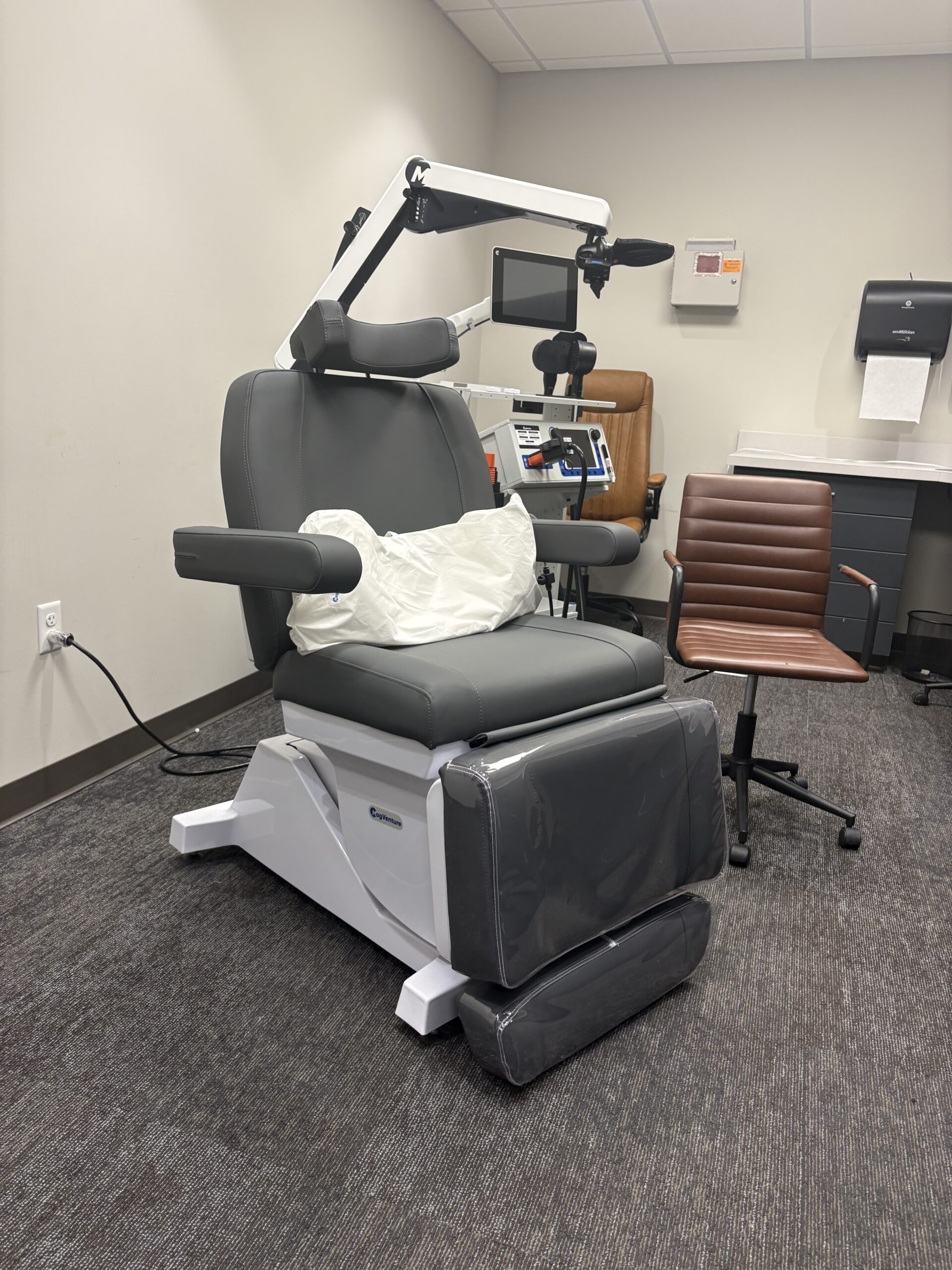
At Discovery Texas Interventional Psychiatry, TMS is delivered using the MagVenture TMS system, which is FDA-cleared for the treatment of Major Depressive Disorder. The same platform supports both standard TMS and Theta Burst Stimulation, a shorter session format. Your provider determines which approach fits your needs, your history, and your insurance authorization — it isn’t a one-size-fits-all protocol.
Just as importantly, we treat TMS as what it is: a serious medical treatment that deserves careful screening, individualized planning, and ongoing monitoring. Your care is led by a psychiatric provider and delivered by a trained TMS team. We’re also part of a connected family of care — as a sister entity to Discovery Point Retreat, we make it straightforward to move between levels of support when depression is part of a larger picture.
When Is TMS the Right Next Step?
Deciding to look beyond therapy and medication is a real moment, and it deserves a clear-eyed answer rather than a sales pitch. TMS is generally considered when someone has a diagnosis of Major Depressive Disorder and hasn’t found enough relief from antidepressants and talk therapy — often after trying two or more medications without the response they hoped for. It is not a replacement for those treatments so much as an additional, evidence-based tool when they fall short.
The evidence base has grown steadily since the first device clearance. The National Institute of Mental Health notes that strong clinical evidence supports the effectiveness of rTMS in reducing depressive symptoms, and that brain stimulation therapies are an important option for people whose depression has not responded to other treatments. Major health systems offer it too — the U.S. Department of Veterans Affairs runs dedicated neuromodulation clinics that use rTMS for treatment-resistant depression. That kind of adoption is part of why TMS is regarded as a mainstream, not fringe, treatment.
Still, the only way to know whether TMS fits your situation is a proper evaluation. A psychiatric provider confirms the diagnosis, reviews your treatment history and medical safety information, and weighs whether TMS is medically appropriate before anything begins. If you’re weighing your options, the most useful thing you can do is start that conversation — with us or with your current care team — rather than trying to self-qualify from a website. If you are in crisis right now, call or text 988 for free, confidential support any time.
Explore TMS Therapy
This page is the starting point. From here, you can go deeper into the parts of TMS that matter most to your decision:
- How TMS Works — the science in plain language, from mapping to daily sessions
- What to Expect — the step-by-step process at DTIP
- Is TMS Right for You? — how candidacy and eligibility are evaluated
- Safety & Side Effects — what to know about tolerability and contraindications
Key Terms
Transcranial Magnetic Stimulation (TMS)
A non-invasive treatment that uses magnetic pulses to stimulate nerve cells in mood-regulating regions of the brain. It is performed in-office, without medication or anesthesia.
Repetitive TMS (rTMS)
The standard form of TMS used for depression, in which the magnetic pulses are delivered repeatedly during a session and across a course of treatment.
Theta Burst Stimulation (TBS)
A newer pulse pattern that delivers stimulation in a shorter session format. The MagVenture system supports TBS as well as standard TMS.
Motor Threshold
The individualized stimulation level your provider identifies during a mapping appointment, used to personalize the strength and position of your treatment.
MagVenture TMS System
The FDA-cleared TMS platform used at DTIP, capable of delivering both standard TMS and Theta Burst Stimulation.
FDA-Cleared
A regulatory status meaning the FDA has determined a device is substantially equivalent to a legally marketed device for its intended use. TMS devices are FDA-cleared for Major Depressive Disorder.
Helpful Resources
- NIMH — Brain Stimulation Therapies: Federal overview of rTMS and related treatments, including how they work and who they’re for.
- NIMH — Depression: Signs, symptoms, and the range of evidence-based treatments for depression.
- MedlinePlus — Depression: Plain-language patient information from the U.S. National Library of Medicine.
- U.S. Department of Veterans Affairs — Neuromodulation Clinic: Example of rTMS offered within a major health system for treatment-resistant depression.
- 988 Suicide & Crisis Lifeline: Free, confidential crisis support, available 24/7 by call or text to 988.
Frequently Asked Questions
Is TMS FDA approved?
TMS is FDA-cleared for the treatment of Major Depressive Disorder, and certain TMS devices are also cleared for other approved indications. “Cleared” means the FDA has reviewed the device and determined it is appropriate for its intended use.
Is TMS painful?
TMS is generally well tolerated. Some people notice mild scalp discomfort or a tapping sensation during sessions, which usually eases as treatment continues. You stay awake and can return to your normal activities right away.
Does TMS require medication or anesthesia?
No. TMS is medication-free and does not require anesthesia or sedation. You remain awake during each session and can drive yourself to and from your appointments.
How is TMS different from ECT?
TMS and ECT are both brain stimulation treatments, but TMS uses focused magnetic pulses, does not require anesthesia, and is not associated with memory loss. As MedlinePlus notes, rTMS is not as powerful as ECT, but it is a gentler, in-office option that many people tolerate well.
How long does a course of TMS take?
A typical course involves a series of sessions over several weeks, usually on weekdays. The exact number depends on your provider’s recommendation, your progress, and your insurance authorization. Our How TMS Works page explains the treatment course in more detail.
How do I find out if I’m a candidate?
Eligibility is determined by your provider and TMS team after reviewing your symptoms, treatment history, and medical safety information. A good next step is our Is TMS Right for You? page, or you can reach out and we’ll help you start a screening.
Can I keep taking my medication during TMS?
In most cases, people continue their current medications during a course of TMS, but this is always decided with your provider. Because TMS doesn’t circulate through your body the way medication does, it can often be combined with an existing treatment plan. Your provider will review everything you’re taking before treatment begins.
Where is TMS offered near me?
Discovery Texas Interventional Psychiatry provides TMS in the Dallas–Fort Worth area. If you’d like to know whether you’re a candidate or what your insurance covers, reach out and our team will walk you through the next steps and verify your benefits for you.